
CONVERSION OPTIMISATION – WE’LL BOOST YOUR TURNOVER!
Our experts will carry out a detailed review of your shop. We’ll provide you with specific recommendations on how to improve the design and usability, and how you can generate more revenue from your shop.
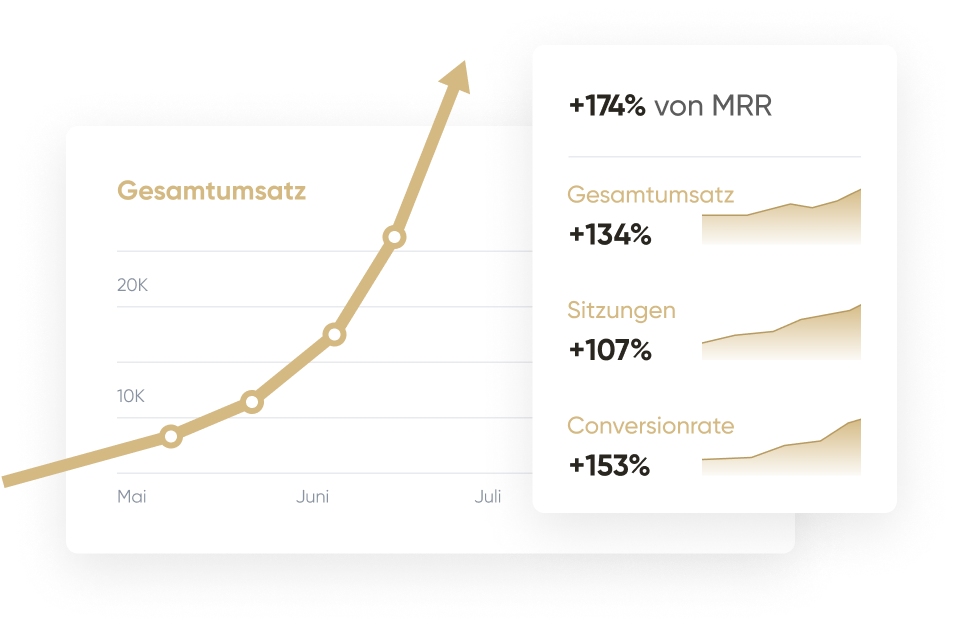






Do you recognise yourself in this?
You’re the owner of a successful Shopify shop. Your products are a hit with your customers. You’ve long since overcome all the initial hurdles of setting up your business. Now you want to really scale up your brand. The sky’s the limit! However, you’re finding that the following challenges are weighing on you day in, day out:
Symptoms
- Click prices for adverts are getting more and more expensive
- Your margins are falling due to rising advertising costs
- Competitors are catching up with you or copying you
- Many visitors leave without buying anything
- But you don’t really know why
WHY?

Specific recommendations for action
We will provide you with a list of specific recommendations on how to optimise your shop and increase your turnover.

Revenue-driven prioritisation
Thanks to our many years of experience, we are perfectly placed to assess which measures will actually have an impact on your turnover. Our focus is always on achieving the highest return on investment.

Quick wins that can be implemented straight away
Our analysis will provide you with actions you can implement straight away. As a result, an investment in the Shopify audit often pays for itself within the first month.
This is how we optimise
Your Shopify shop.

The GWA Formula for Success
- Collection and analysis of visitor data
- Identifying the biggest conversion killers
- Optimisation plan prioritised by potential
- Optimisation goes live as part of the A/B testing process
- The test result provides precise evidence of the increase in turnover
There are two ways – which one suits you best?
The aim is clear: we want to increase your conversion rate. However, depending on your current situation, there are two different approaches that make sense. We’ll work out together which one is right for you during the shop analysis.

500–1,000 orders per month
One-off basic optimisation
You’ll benefit from the insights gained from our A/B tests and receive a comprehensive shop optimisation to help you achieve your next surge in sales.

Method
Comprehensive one-off optimisation

Project duration
4–8 weeks

Main objective of the method
A sharp rise in turnover

1,000+ orders per month
Optimisation through A/B testing
Thanks to your high visitor numbers, individual changes can be tested straight away. Your conversion rate and turnover are rising steadily.
Method
Ongoing optimisation through A/B testing
Project duration
Long-term collaboration
Main objective of the method
The main objective of the ‘Market Leadership & Profit Maximisation’ method
after a few weeks
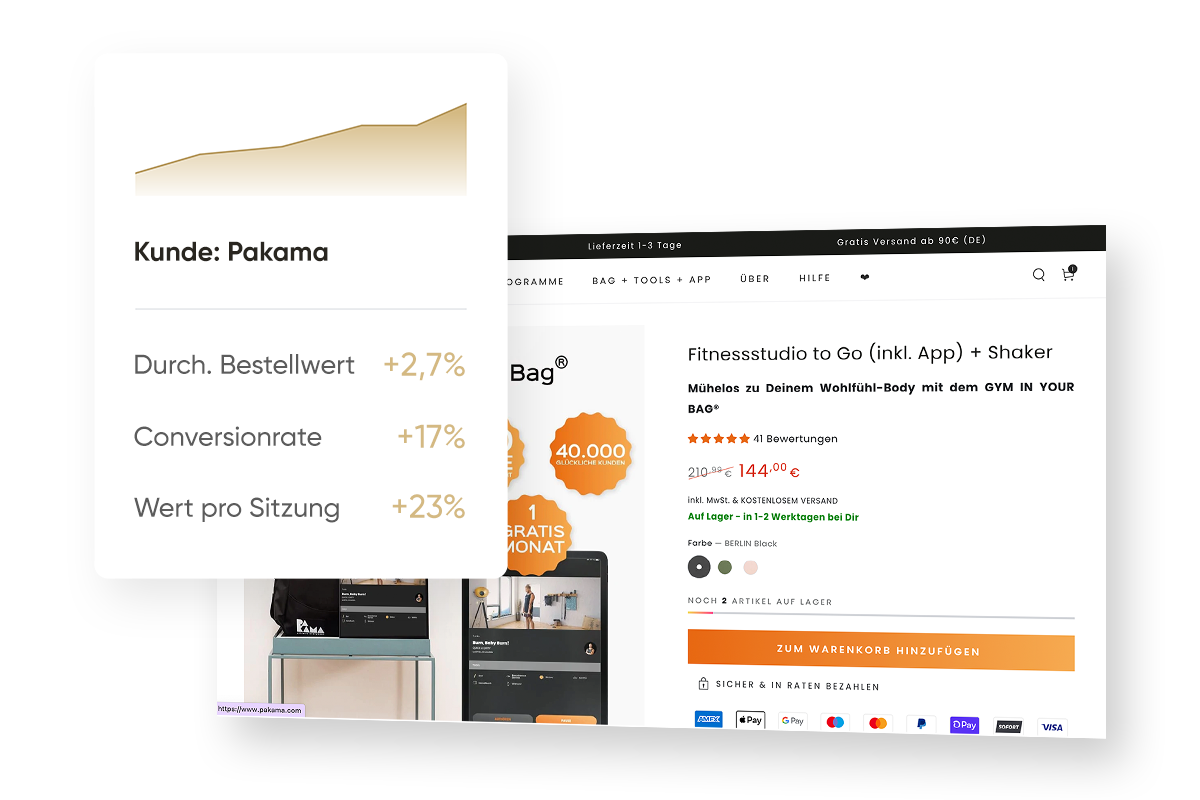
Pakama
This A/B test resulted in a 17 per cent increase in the overall conversion rate and a 23 per cent rise in page value.
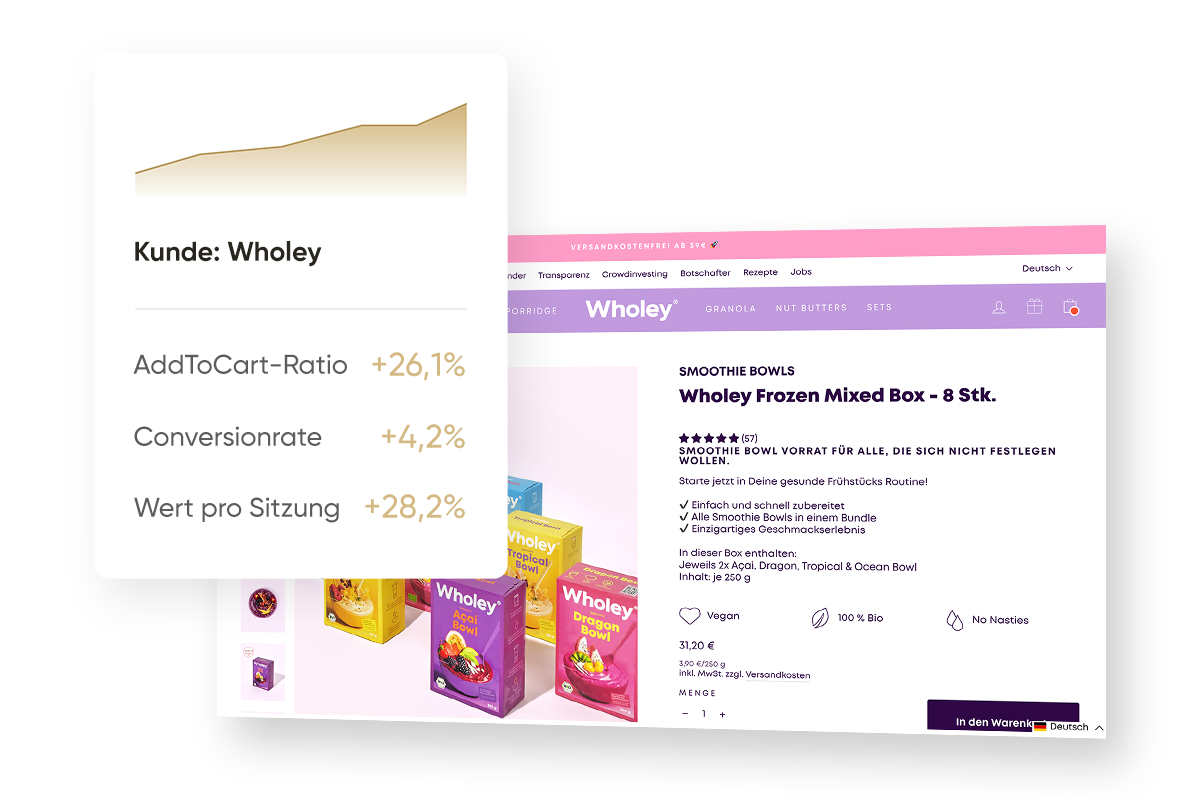
Wholey
Thanks to our many years’ experience in optimising Shopify shops, we were able to achieve a 26.1 per cent increase in the ‘Add to Cart’ rate and a 4.2 per cent improvement in the overall conversion rate in our very first test. As a result, the page value has also risen by 28.2 per cent.
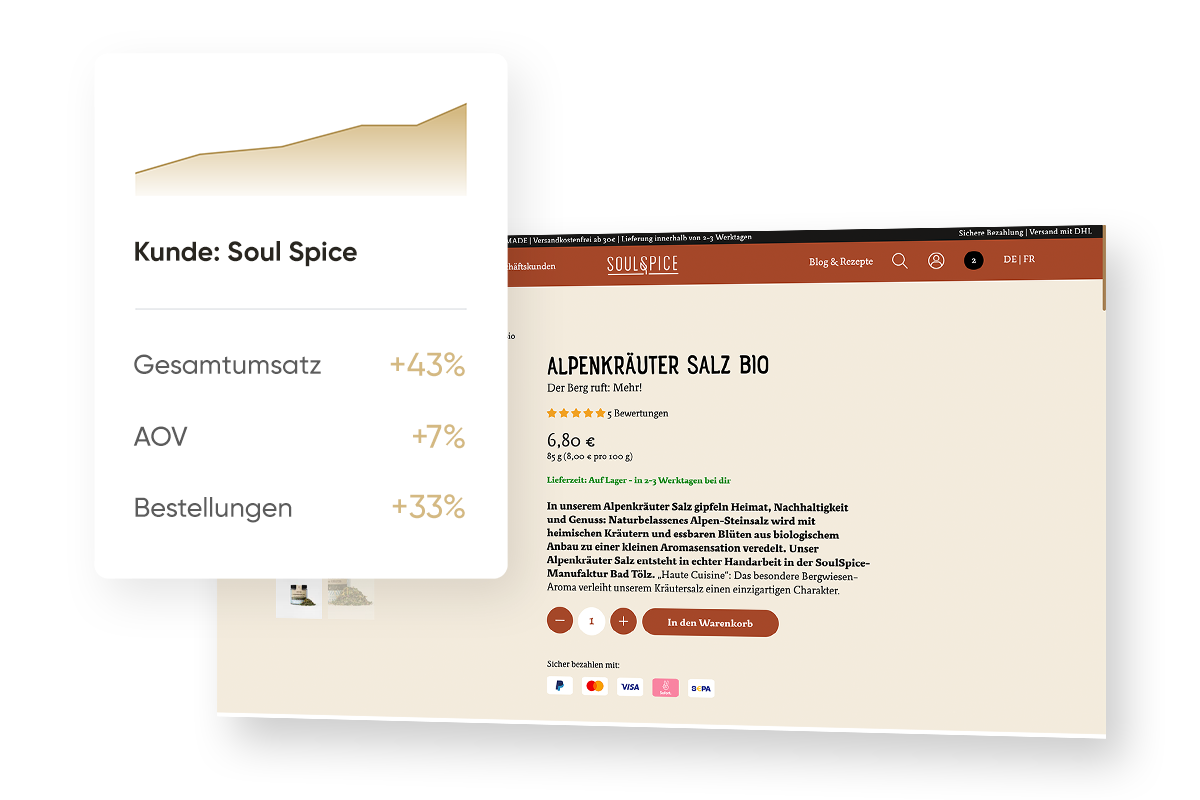
Soul Spice
By implementing targeted optimisation measures on the shop, we were able to increase turnover by 43 per cent in the first four weeks alone.
 1
1
Enquiry
You can request a free shop analysis using the form on our website.
 2
2
Preliminary meeting
One of our staff members will speak to you on the phone to prepare the analysis of your shop.
 3
3
Shop analysis
We’ll take a close look at your shop together and work out a solution tailored to your situation.
 4
4
Cooperation
You can then decide whether you’d like to implement the solution yourself or work with us to do so.












Conversion Optimisation FAQ
Conversion optimisation is the process of improving the user experience on a website or digital product in order to increase the likelihood that visitors will carry out a desired action, such as making a purchase or filling in a registration form. This process involves analysing user data, conducting tests and implementing changes aimed at boosting the website’s effectiveness and efficiency. The aim is to maximise the proportion of visitors who become customers or leads, thereby enhancing the overall success of the digital presence.
The conversion rate is calculated by dividing the number of conversions by the number of visitors and multiplying by 100 = conversion rate in per cent. The conversion rate provides an overview of how many out of every 100 visitors complete a specific goal on the website. These goals may vary depending on the type of website.
Conversion optimisation is important because it helps to maximise the return on investment (ROI) of marketing activities. By improving the user experience of a website or digital product, visitors are more likely to carry out the desired actions, such as making a purchase or filling in a form. This leads to higher turnover and greater efficiency without the need for additional advertising expenditure.
The aim of conversion optimisation is to increase a website’s conversion rate – in other words, to increase the percentage of visitors who become customers. This is achieved both through best practice in UX design and through tailored measures.
Conversion optimisation encompasses several areas. Fast loading times, optimised usability, a clear customer journey, compelling CTAs and a host of other factors ensure that there is a significant difference between a website that has simply been set up and one that has been optimised for conversion.
There is no one-size-fits-all answer to what constitutes a good conversion rate. It depends on the specific event in question. In e-commerce, the average figures range from 2 to 5 per cent. The season also makes a difference here, and of course success depends on the type of product you offer.
Various techniques are used in conversion optimisation, including A/B testing, usability testing, heatmaps, analysis of user behaviour, improvements to loading times, and the optimisation of content and calls to action (CTAs). These techniques help to identify which elements of a website or digital product are most effective at increasing the conversion rate.
A conversion optimisation agency analyses websites and digital products to identify areas with potential for improvement and implement strategies that increase the conversion rate. This involves carrying out tests, analysing user data, optimising content and design, and continuously monitoring and adjusting to ensure that the measures taken deliver the desired results.
You choose the right conversion optimisation agency by taking into account criteria such as experience, a proven track record, industry knowledge, the services offered and client reviews. It is important to find an agency that has a deep understanding of your company’s specific challenges and objectives and has a proven track record of successfully delivering similar projects.
Conversion optimisation agencies offer a wide range of services, including website analysis, A/B testing, user feedback analysis, content optimisation, SEO optimisation, and the implementation of improvements. These services aim to improve the user experience and increase the likelihood that visitors will carry out the desired actions on the website.
The sectors that benefit most from a conversion agency are e-commerce, SaaS (Software as a Service), financial services, travel and tourism, and any other sector that relies heavily on online conversions. These sectors can significantly increase their turnover and efficiency by improving their conversion rates.
The success of conversion rate optimisation is measured by an increased conversion rate, improved ROI, lower bounce rates and higher user satisfaction. These metrics indicate whether the measures implemented are achieving the desired results and contributing to the attainment of the organisation’s objectives.
The time it takes for the results of conversion rate optimisation to become apparent varies depending on the complexity of the changes and the scope of the optimisation, but can range from a few weeks to several months. Continuous testing and refinement are necessary to ensure that the measures are successful in the long term.